
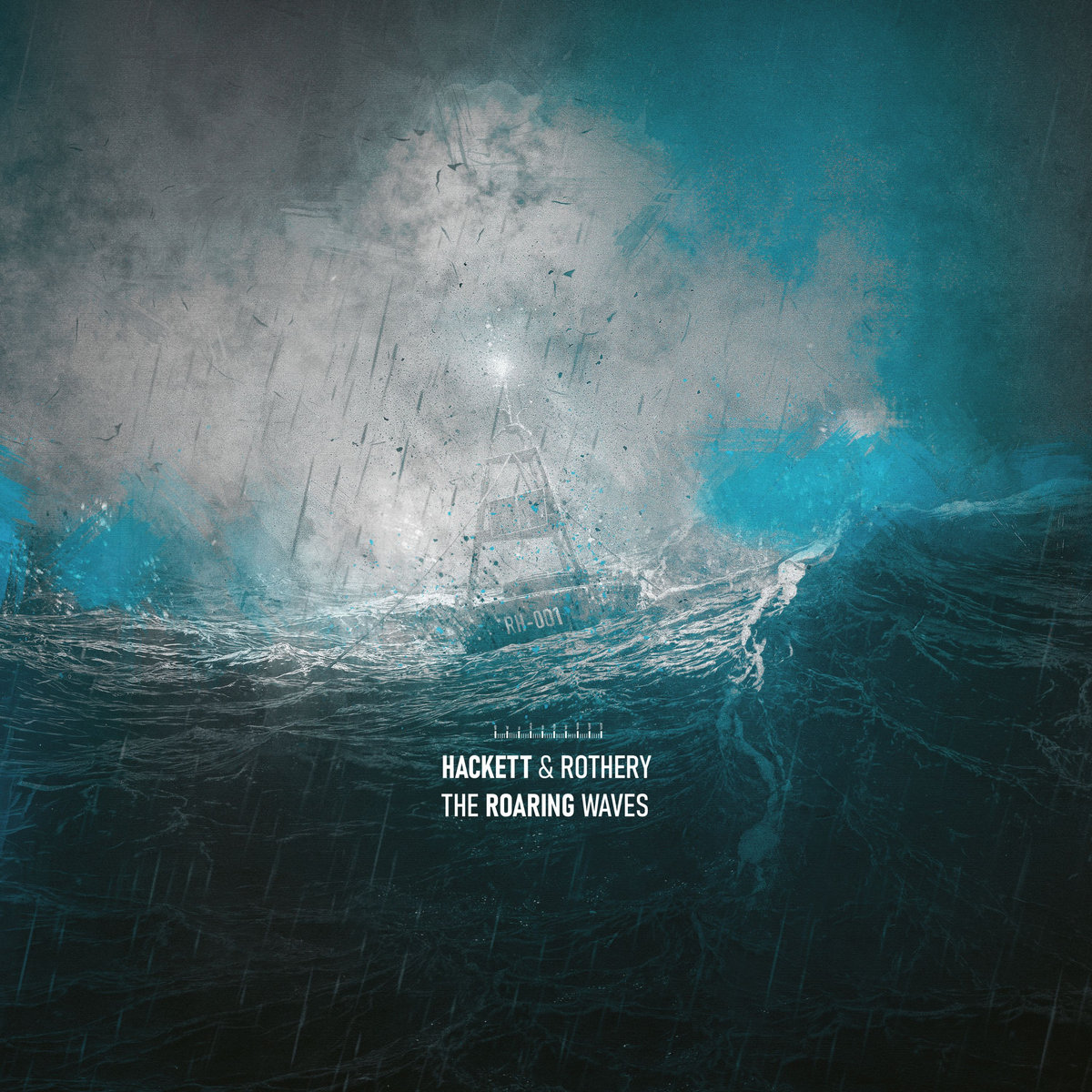
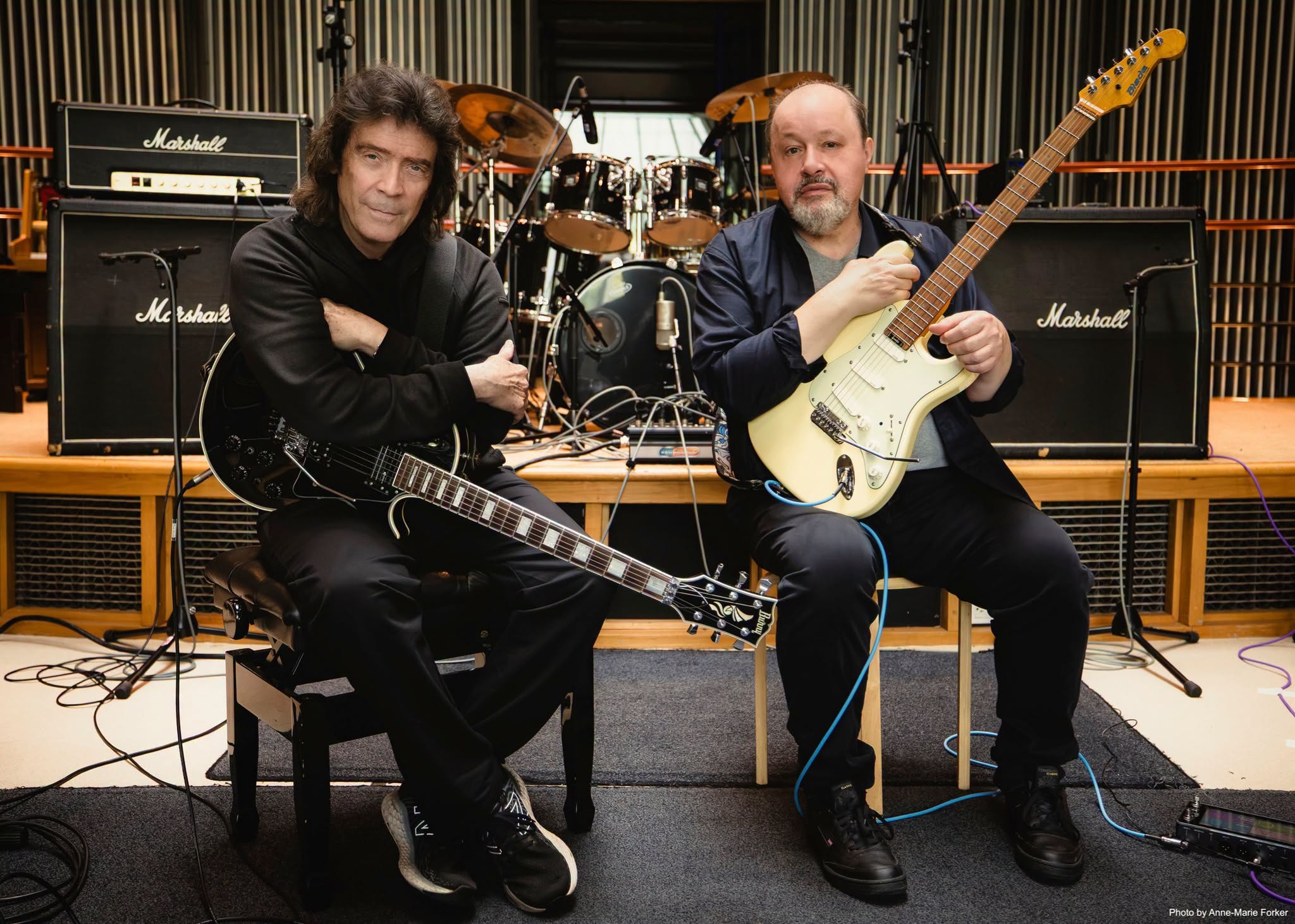
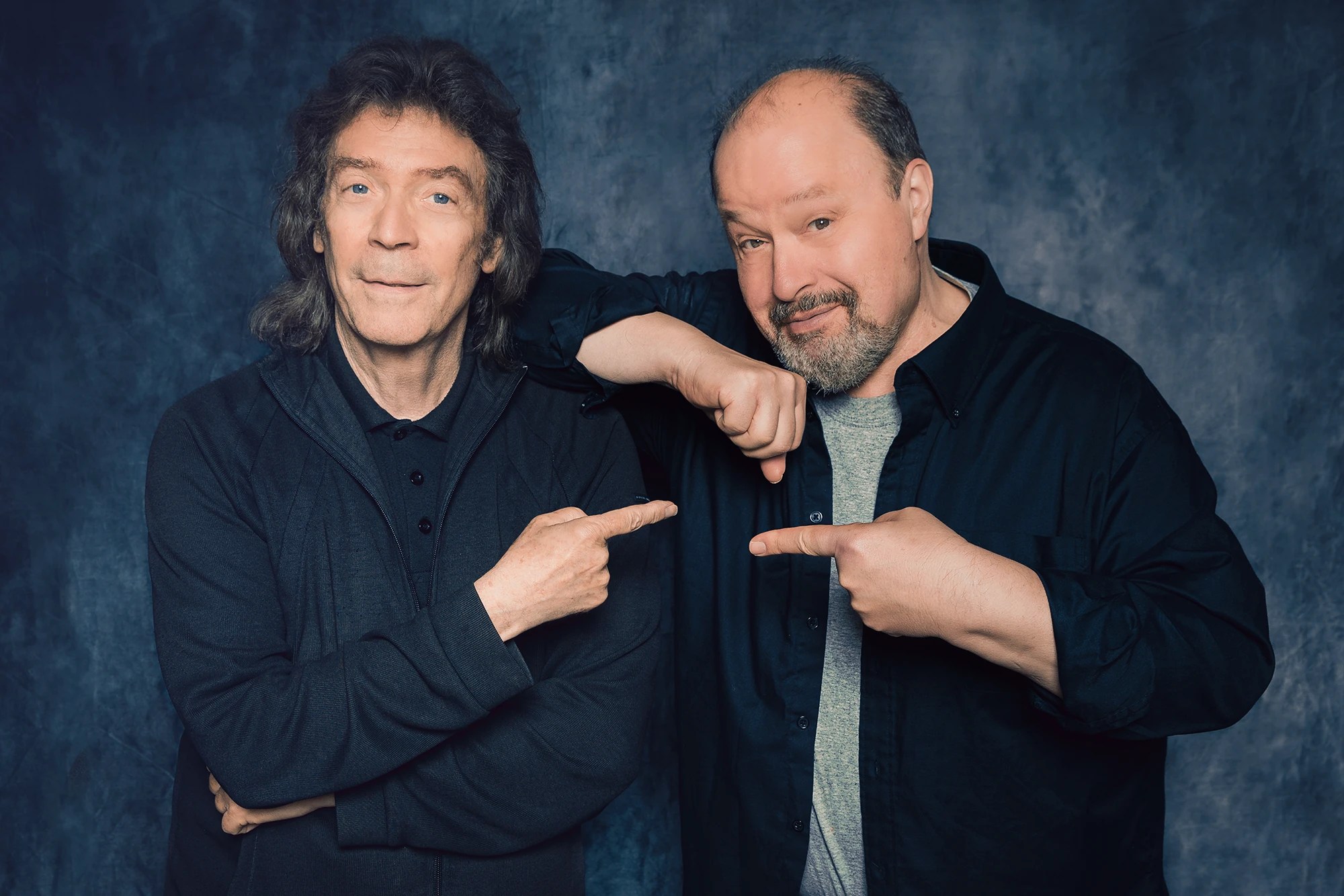
I probably don’t need to introduce Steve Hackett and Steve Rothery. Hackett is the legendary guitarist of Genesis, though he’s been on his own for decades and I prefer his solo music—I’ve seen him live at least six or seven times. Rothery is the legendary guitarist of Marillion, a band that is hit or miss for me. Still, it made me stand up and listen when I heard they would be joining forces for The Roaring Waves, which released through Inside Out Music on August 28th.
My initial thought was, “Well, this is either going to be a revelation, or it’s going to be two guitar giants having some fun.” I do think it’s a bit of the latter. Now, they both play guitar on the record, obviously, but Hackett also brings his harmonica and Rothery brings bass and keys. The rest of the lineup includes Riccardo Romano on keys and bass, and Daniele Pomo and Leon Parr on drums.
The thing that puzzles me about this album is the title. The Roaring Waves? This album sounds much more like lapping, floating, gentle waves. The album name, the song titles, and the imagery all point in the direction of ferocious, stormy seas. But the album is actually quite reserved, nuanced, and spectral. There is plenty of excellent, deft guitar work, lots of luscious rhythms and layers, but I struggle to call this progressive rock. It’s something else, something more cinematic in the quietest way possible.
Honestly, I love subtle music, love ambient. This has plenty of color and soul, and I think that’s what they wanted. I do love the layering of the rhythms, as that can be quite tremendous, and of the seven tracks, I like them all. Yes, even the last one. But I’ll also say this album probably didn’t scratch the itch many prog fans were hoping. It’s wonderful to hear these two legends play together, but the album ends up feeling like music I’ll put on when I need my nerves soothed, not some magnus opus.
The first half of the record is my favorite. We start with “The Storm”, which does have the most muscular guitars on the album. It does feel mildly tumultuous, but it’s still grey and beautiful. Next is “Sandsend”, one that’s really growing on me with its layers and charm, feeling quite pastoral in its warm synth and responsive guitars lines. “Red Dragon” is fantastic in its mounting atmosphere; more rhythms rise as it progresses, more cinema and color. It’s a really cool song that feels subtly Far Eastern, but it’s the sum total of all the instruments that makes it special.
The first half ends with the title track, which is very Hackett-esque, mainly because of Hackett’s illustrious 12-string acoustic. The song features tons of amazing guitar work, and transitions slowly into something atmospheric and almost haunting. I think it’s my favorite overall.
The second half has some gems. “K-129” is mostly ambient in nature, featuring an extended segment of bubbling, murky keys. I actually love that passage and how the guitars filter in like light from the ocean surface. Next is “The Black Sea”, which has a mournful tone and slower tempo. It’s all about the emotion, which I think is deep and quite potent.
The closer changes everything, though; “Pacific Coast Highway” injects some harmonica and Americana, not quite country but getting close. It feels like old school bluesy, classic rock, too, with its steady beat, jangly guitars, and pealing harmonica notes. Honestly, we’ve all heard songs exactly like it, but it’s a treat to hear Hackett’s digging guitar fingerwork in the mix, and the light vocal melodies that rise at the end are nice.
The Roaring Waves isn’t the masterpiece I know some were expecting, but that’s not what was promised, so it’s all about managing expectations. Hackett & Rothery have managed to create a sometimes fun, sometimes emotional, sometimes enthralling record that soothes rattled nerves. It’s undeniably beautiful, deeply reserved overall, yet the styles of both guitarists are palpable in every song. It’s worth your time and will grow on you.
____________
Find Hackett & Rothery online:
____________

